29 September 2006

Wow....

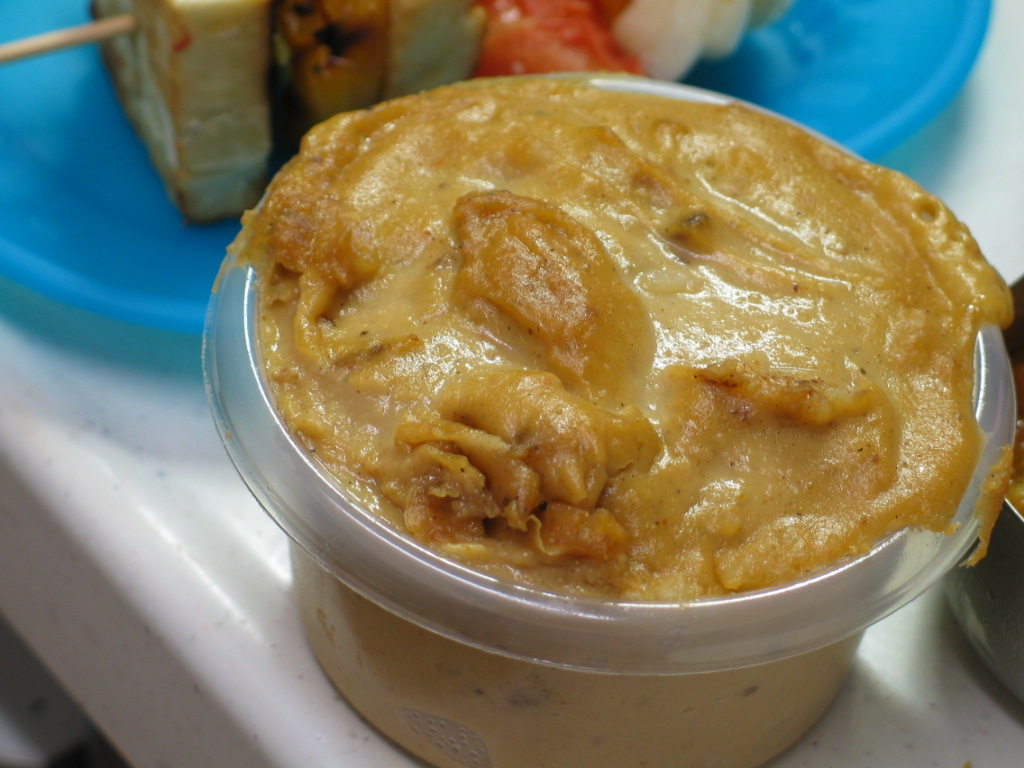
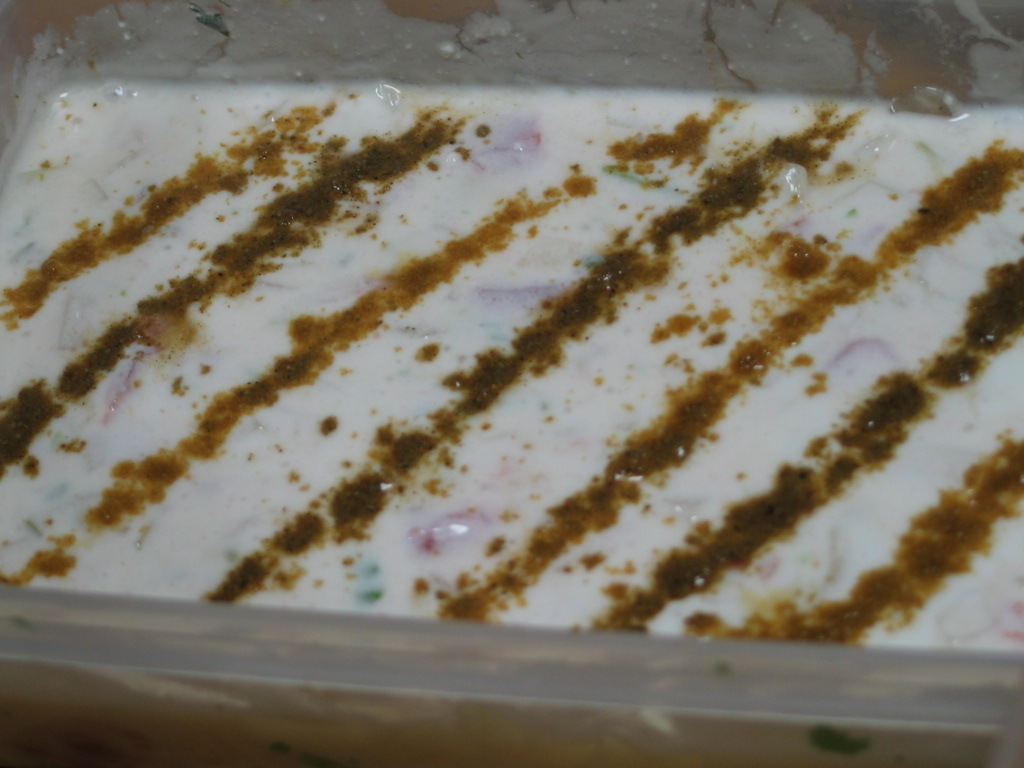
Is that cool, or what?? (Check #7 in case you're trying to figure what on earth I'm talking about!)


Traditional South Indian Meals - 2

A more popular combination of tradtional festive lunch: sambar, rasam, vadai and a traditional salad.

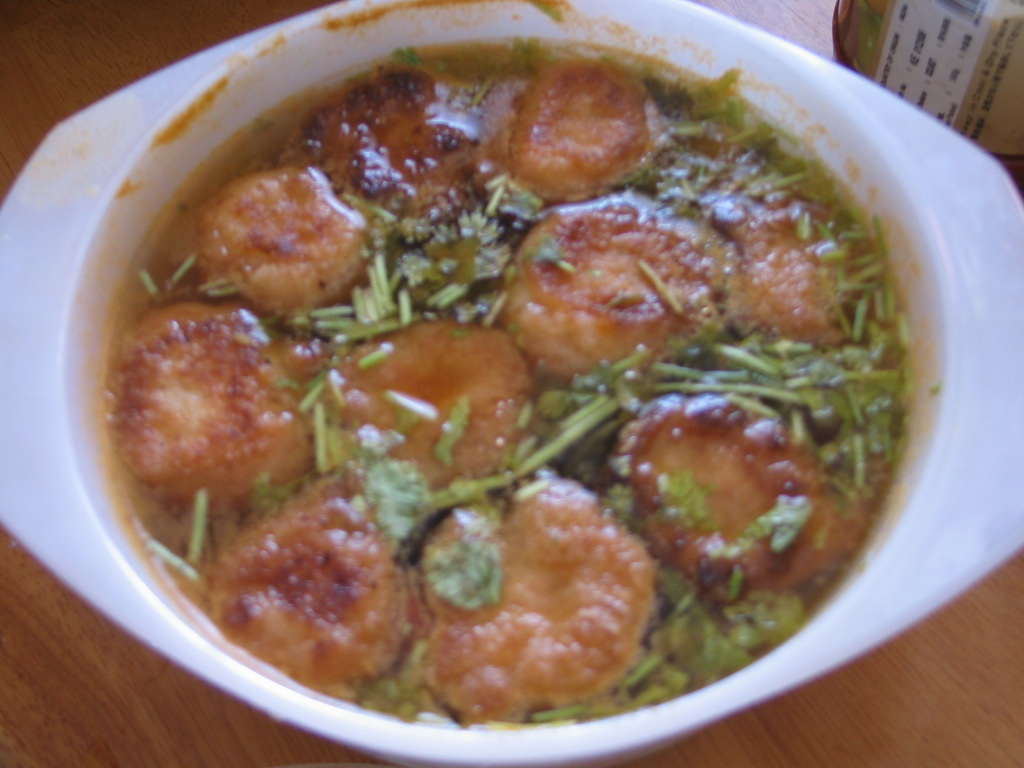
Whats a festive meal without piping hot urad vadas? Hot vadas in sambar are my idea of comfort food.


And vadais dunked in a light spicy rasam are absolutely perfect on a slightly chilly day!

Of course this was accompanied by the requisite 2 vegetables, one roasted/fried, and the other with a little coconut. Standard choices being roast potato curry and some beans with coconut!

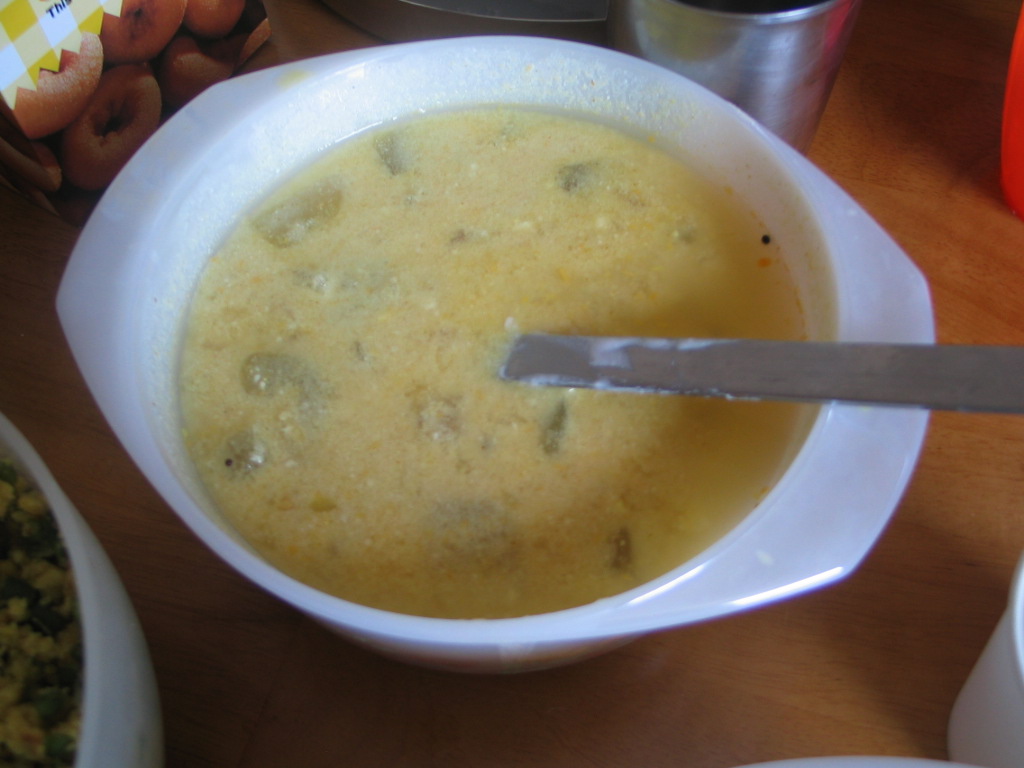
I've invited a few Japanese friends over for a Navaratri lunch this weekend, and I've decided to serve a traditional south Indian meal this time. Here's wishing me luck!

Sambar (with fresh ground spices)
serves 6


The spices:
Roast individually and grind to a smooth paste
40 gms coriander seeds
20 gms dry red chillies
1/2 tsp fenugreek seeds
2 tbsp chana dal
1 tbsp tuvar dal
1 pinch hing
1/4 cup grated coconut

1 lemon size ball of tamarind (dissolved in 3 cups water)
1 cup tuvar dal (cooked with a little turmeric)
1 cup sliced white radish
oil
1 tsp mustard seeds
1/4 tsp fenugreek seeds
1 pinch hing
curry leaves
salt to taste

Heat oil. Temper with mustard and fenugreek seeds and hing.
Add radish slices and stirfry for 2 minutes.
Add tamarind water, salt and the ground spices.
Bring to a boil, and the reduce to a simmer till the radish pieces are cooked.
Add cooked dal and curry leaves. Adjust consistency with more water if desired.
Bring to boil.
Serve hot.


Salad
serves 6


1/4 cup split yellow moong dal (Soaked in water for 30 mins and drained)
2 large carrots (peeled and grated)
1 large firm tomato (chopped fine)
1 tbsp coriander leaves (finely chopped)
1 tsp green chilli (finely chopped)
1 tsp ginger (grated)
1 tsp lemon juice (or to taste)
2 tbsp grated coconut (optional)
salt to taste

Toss all the above in a large bowl, and transfer to a serving bowl.
Refrigerate till ready to serve.


Traditional South Indian Meals - 1

With the festival season on now, yours truly is on a cooking spree... traditional dishes, no onions or garlic... yummy time..

Of course I miss being in Singapore, where I could get every vegetable I wanted, whether in season or not. And did I mention these were fresh veggies? No frozen stuff at all! Ah well, now I can still make a nice traditional meal with what is available in this neck of the woods!

This is one of my alltime favourite combinations- morkuzhambu, beans parappu-usli, and brinjal pittla. Pittla is one of my favourite dishes... ever. Mom makes lovely pittla with karela or white pumpkins. I don't get the latter here and hubby won't eat the former!

This combination is great for entertaining too. Hearty, filling and does have a festive feel to it. I used to make this whenever we invited some of our more orthodox friends who wouldn't eat onions, garlic etc.

Morkuzhambu
serves 4


3 tbsp Chana dal
2-3 green chillis
1 tbsp coriander seeds
1 tsp cumin seeds
1/4 cup grated coconut

1 cup white pumpkin (cut in 1"cubes and boiled)
2 cups sour yogurt
1 tbsp oil
1/2 tsp mustard seeds
1 pinch hing
2 cups water
Curry leaves
salt to taste

Soak Chana dal, green chillis, coriander and cumin seeds for 30-45 minutes. Drain and reserve water. Grind to a very smooth paste with the coconut (use reserved water if needed).
Heat oil. Temper with mustard seeds and hing.
Add boiled pumpkin and saute lightly.
Add water and the ground spices and bring to a boil.
Beat yogurt till smooth.
Reduce flame and add yogurt to the spice mix.
Add salt to taste.
Add curry leaves.
Stir until well combined and bring to a simmer. Serve hot.

Note: One thing to remember is, NEVER boil after adding yogurt. Take the pan off the stove as soon as the mix begins to simmer. Otherwise the yogurt tends to curdle. That's why I boil the spices in water first, so that the chana dal gets time to cook fully, AND yogurt doesn't curdle.


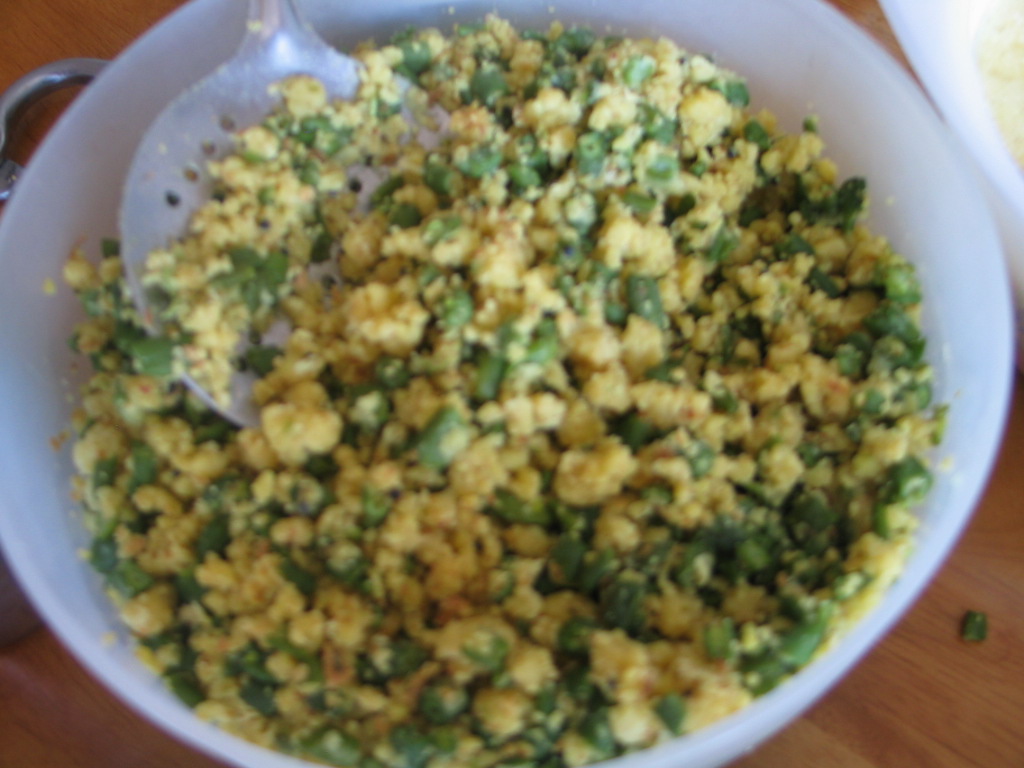
Beans parappu-usli
serves 4


500 gms french beans (strung, cut, parboiled in salt and drained)
1 1/2 cups tuvar dal
1/2 cup chana dal
2-3 red chilis
1 pinch turmeric
salt to taste
1 tbsp oil
1 tsp mustard seeds
1 pinch hing

Soak the dals and red chilis for about 45 mins.
Drain and grind to a coarse slightly dry mix with turmeric and a little salt.
Steam the dal paste.
Let it cook, and break it into crumbs with your fingertips, taking care never to mash it to a paste-like consistency.
Heat oil, temper with hing and mustard seeds.
Add cooked beans. Fry for 4-5 minutes.
Add steamed and crumbled dal. Mix well.
Adjust salt to taste. Cook for 5-7 minutes till well combined.

Note: The dryer the dal is ground the better. After steaming, if the dal is dry enough, I grind it to a dry powder in a food processor. Takes lesser cooking time this way, and way less oil too.


Brinjal Pittla
serves 4


1 cup groundnuts cooked
1 cup tuvar dal cooked (discard excess water, or save for rasam)
1 lemon sized ball of tamarind (dissolved in water)
1 pinch haldi
1 pinch hing
salt to taste

Grind to paste or powder:
2 tbsp roast dhania
1 tbsp roasted and crushed chilli
1 tbsp roasted chana dal

For tadka:
4 tbsp oil
mustard
chana dal
hing
2 urad appalams
1/2 cup grated coconut

salt to taste
1 - 1.5 cup diced brinjal

Soak the brinjal in tamarind water, and bring to boil with haldi, hing, salt and the podi/paste.
When the vegetable is cooked, and the raw tamarind smell is gone, add the groundnuts, cooked dal, salt and bring to boil. Keep aside
Heat oil. Fry the appalams. Break and keep aside.
In the remaining oil make tadka of mustard, hing and chana dal.
In the same vessel, roast the grated coconut till browned.
Add the tadka, appalam and coconut to the pittla.
Mix well and let soak for at least half an hour before serving.

Notes: Pittla can be made with white pumpkin or bitter gourd (karela) too.
For white pumpkin pittla, cut pumpkin into 1cm cubes, and cook with salt and a pinch of haldi first. Then start as with recipe.
For brinjal pittla you could add 1-2 tbsp of the podi used for brinjal curry, instead of the masala paste suggested here.
For karela pittla, fry karela pieces till light brown and then start the recipe as above.

06 September 2006

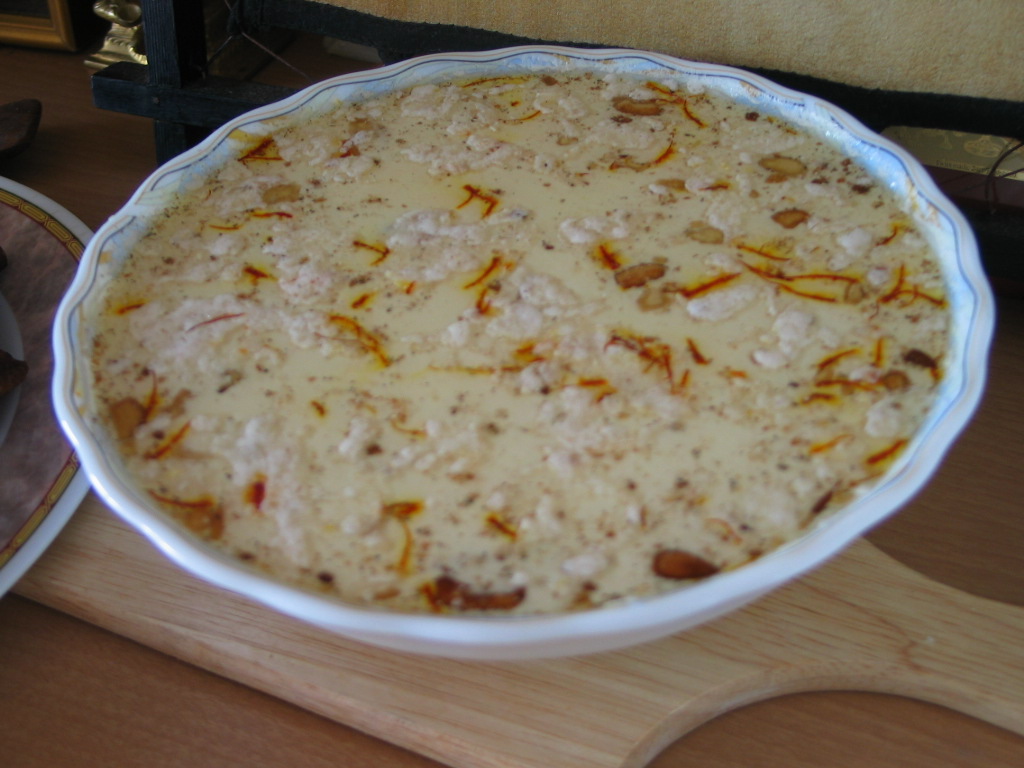
Vermicelli and Milk Pudding - SHF23

(Just so I don't offend the traditional Indian chefs reading this, I gave Semiya Paayasam this slightly anglicised name to make it more recognizeable to other chefs in this month's SHF)

Since I first heard of SHF, I've wanted to work on one, but somehow never got around to it. But this month's sounded just wonderful, and I'd just tried this twist on a traditional favourite to rave reviews... from my husband and three-year-old daughter, who're absolute gourmets, and are rather difficult to please.

The traditional Semiya Paayasam is made with roasted vermicelli, milk, and sugar, and garnished with roasted cashewnuts, raisins, powdered cardomom and sometimes saffron.

The last time I made some of this lovely pudding, I thought, why not give it a few extras and see what comes of it?... I decided to fry figs, almonds, and cashewnuts in clarified butter, ground them to a smooth paste and added them to this old-fashioned traditional dish. The result was nothing short of spectacular. So here's hoping this is acceptable as a SHF entry! I'm posting this picture because I don't have a better one :( But I'm going to make it again before the deadline for this SHF, and hopefully get a better picture. (I could use some photography tips here)

Vermicelli Pudding
makes 6 servings


The Basics
1 cup fine vermicelli (broken into 1/4" pieces)
1 liter full cream milk
1 cup sugar (or more to taste)
1/2 cup water
1 pinch baking powder (optional)

Garnish:
1 tbsp chopped cashewnuts
1 tbsp raisins
2 pinches powdered cardomom
1 pinch saffron

The Surprise
4-6 dried figs
2 tbsps chopped almonds
1 tbsp chopped cashewnuts

1/4 cup clarified butter or ghee
(Note: If you're making ghee just for this one recipe, use one stick of butter in this recipe)

Heat 2 tbsps ghee. Lightly fry the figs , cashewnuts and almonds. Let cool.
Grind these to a smooth paste, adding water (if required) a teaspoon at a time. Keep aside.

In a heavy-bottomed saucepan, heat remaining ghee (clarified butter).
Lightly fry the cashews for the garnish till golden brown. Keep aside.
Lightly fry the raisins till well plumped. Keep aside.

Fry broken vermicelli , stirring frequently, till it starts to turn golden brown.
Add water and stir well. Add milk and baking powder and bring to a boil.
Lower flame and let the pudding simmer till reduced by 1/3rd. Stir frequently.
Add sugar. Stir and continue to simmer till completely dissolved.
Add the fig and nut paste, and stir until there are no lumps in the mixture.

Pour into a serving bowl, and garnish with the fried cashewnuts, raisins, cardomom powder and saffron.

This dessert can be served hot or cold. Tastes wonderful the next day too.

Note: I use baking powder only if I think the milk is likely to curdle... again, depends on kind of milk.

29 August 2006

Blueberry Muffins

Blueberry Muffins
(makes 12 regular/48 mini muffins)


300 gms flour
2 tsp baking powder
1/2 tsp ground cinnamon
1 pinch salt
180 gms unrefined (or regular) sugar
150 grams butter (melted and cooled to room temperature)
2 eggs
350 ml milk (full cream, preferably)
1 tsp vanilla essence (optional)
1 cup blueberries (fresh, frozen and thawed, or canned)

Preheat oven to 180C. Grease muffin moulds, or line with paper cups.
Blend butter, milk, eggs and vanilla till smooth.
Mix flour, baking powder, cinnamon, salt and sugar in a large bowl. Make a well in the center.
Pour in the liquid mixture and stir till just about mixed. Do not beat like in a cake.
Gently fold in blueberries.
Pour into prepared cups and bake for 15 minutes (or till done).

Variation:
Substitute blueberries with raisins. If using raisins, leave out cinnamon.

Pav-Bhaji

Pav Bhaji
makes 8 servings


Bhaji:
4 large potatoes
1 cup cauliflower florets
1 cup chopped french beans
1 large carrot
1 cup peas
3 large onions (finely chopped)
4-6 cloves garlic (grated fine)
1 capsicum (deseeded and chopped fine)
3 tomatoes (chopped fine)
3-4 tbsp pav bhaji masala
Butter or oil for frying

Garnish:
1 large onion (finely sliced)
8 wedges lemon

Pav:
8 hot dog buns (cut in half and slit vertically)
Salted butter

Peel potatoes. Parboil potatoes, cauliflower, carrot, beans and peas till tender. Mash very coarsely and keep aside.
Heat oil/butter.
Fry onions till browned. Add garlic and fry till the raw smell is gone.
Add half the masala and some salt.
Add capsicum and fry till done.
Add tomatoes and cook till oil begins to separate.
Add the mashed vegetables. Mix well.
Adjust salt and let it cook for for about 5 minutes.
Add remaining masala and take it off the flame.

Heat a skillet. Add a little butter, and immediately press the slit buns, cut side down and roast till lightly browned. Turn over and lightly brown other side. Repeat for all buns.

Serve with bhaji and garnish.
Birthday party

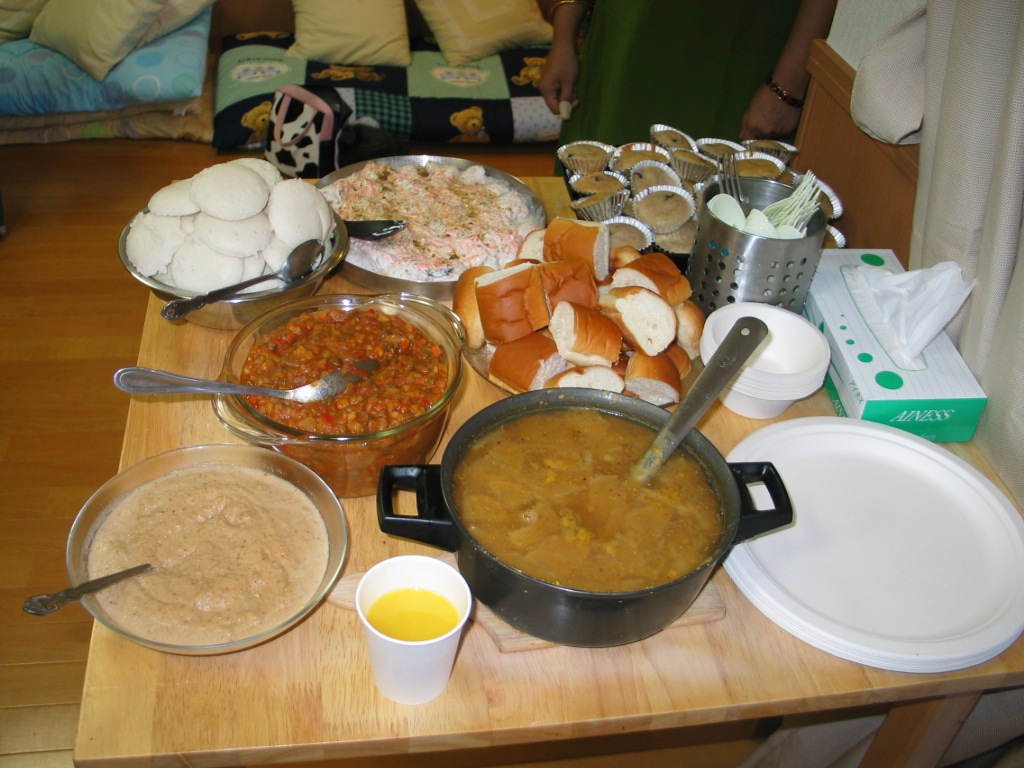
Aditi turned 3 earlier this month, and we had a small party for her. Small party being every single person we knew here who had kids. There were a total of 22 guests, predominantly Japanese. Working out a vegetarian menu that would work for kids too was a real challenge. The end result was this lovely spread you see below...


Idlis with sambar and onion chutney, thayir-vadai, pav bhaji and blueberry muffins. I didn't have a large enough oven, so I ordered a 'Miffy' cake at a local bakery. Not a bad effort, eh?? And I did it all single handed too! And in a kitchen that's the same size as my closets! Of course, there were lots of short-cuts in the menu, but it all turned out brilliant. Contrary to my expectations, the thayir-vadais were a super-hit... I had very little left over. Come to think of it, there were hardly any leftovers!

Final count?? About 70 idlis, 50 vadais, 2 ltrs sambar, 1/2 kg chutney, 2 kgs pav-bhaji and about 45 muffins. Not bad at all in an excuse of a kitchen and in a place that's at the back of beyond, eh?

Next year, we've decided to have it in MacDonalds, and watch everyone else eat, and come home and eat some curd-rice.....

01 August 2006

A recipe and a contest

First of all, I need to find a name for this wonderful concoction. So do try making it, name it and the winner gets my special fruit-cake recipe. Fruitcake? Did that sound a little pedestrian? My special fruitcake takes ages to make.... you see, the fruits are soaked in rum for 3 weeks...

I'm sure that just caught your interest!

I used to eat something similar at this little continental restaurant in Bangalore. I'm sure Golly remembers the place and what this thing used to be called! I suddenly developed an absolutely craving for it, and decided to recreate it from scratch, and from memory too. The result was fantastic! Arun had seconds, thirds and fourths!! That surely means it tastes great!

So all I need now is to think up a nice name for this one..

Whatchamacallit
serves 4


1 big onion
4 cloves garlic (minced)
1 big potato
1 cup cauliflower florets
12-15 french beans
1/2 cup peas
1 carrot
1/2 cup broccoli florets
1 capsicum
4+2 tbsp butter
1 tbsp flour
1+1 cups milk
1 cup cream
1 cup vegetable stock (or 1 soup cube dissolved in 1 cup water)
1 bay leaf
salt to taste
fresh ground pepper to taste
4-6 tbsp grated parmesan cheese

Make roux:
Warm one cup milk.
Melt 2 tbsp butter over a very low flame.
Add flour, and stir well ensuring there are no lumps.
When mixture starts to bubble stir in warm milk, stirring continuously to avoid any lumps.
Simmer for 2 minutes.
Keep aside

Peel, wash and cut all vegetables into small pieces (I suggest 5mm as optimum size)
Melt 4 tbsp butter in a heavy bottomed pan.
Add bay leaf.
Add onions, garlic and saute till transparent.
Add all other vegetables, stir well, cover and cook for 5 minutes on a low flame.
Add vegetable stock and 1 cup milk and continue to simmer for 5 minutes more, or till vegetables are cooked, and retain a little crunchiness.
Add roux, and stir well so there are no lumps.
Season with salt and pepper.
Let is simmer till well combined. (about 10 minutes)
Serve hot with rice.

31 July 2006

Dinner party

This must be the most mixed crowd I've ever catered for! A invited a few of the research students from the Univ to dinner. I cooked for a group comprising of a Slovakian, Hungarian, German, Korean, Malaysian, and of course, Indians... US!

Since it's been a while since we last entertained (all of 3 weeks) I decided to make something slightly fancy. And with the mixed crowd in mind, also considering that the Europeans and the Korean had never eaten Indian food, I had to plan a good menu... balancing out the mild with the unbelievably hot.

The menu I finally came up with has to be one of my best ones to date. Naans, Tandoori salad, Aloo matar, Biriyani, Raita, Malai Kofta and Ice-cream for dessert. I decided on store bought naans as I don't have an oven... yet..
The recipes for biriyani, raita and aloo matar have been blogged here before. The only change, I dunked in about 250 gms of green peas along with the potatoes, and cooked it the same way.

Malai Koftas
serves 8


Koftas as made in this recipe.
Optional: Stuff koftas with chopped cashewnuts and raisins before frying them.

3 big onions
4 cloves garlic
1" piece ginger
1 cup milk powder (or khowa)
1/2 cup almonds (soaked and peeled)
1/4 cup milk
2 tsp garam masala
1" cinnamon
1 bay leaf
2 cloves
1 pod cardamom
1/2 cup cream
2 tbsp oil
salt to taste

Peel onions, garlic and ginger. Boil till onions are clear. Reserve water used in boiling. Cool and grind to a smooth paste. Keep aside.
Grind almonds to a smooth paste with milk. Keep aside.
Heat oil. Add dry spices and let them splutter.
Add onion paste and fry for 3 minutes.
Make a smooth paste of milk powder and 1/2 cup reserved cooking water. Add to the onion paste and simmer for 5 minutes.
Add ground almonds, Garam masala and adjust salt to taste. Simmer for 3-4 minutes till well combined. Dilute with reserved water to adjust to desired consistency.
Arrange fried koftas on serving platter.
Pour hot gravy over them just before serving. Garnish with cream.

Tandoori Salad
serves 4


100 gms Paneer
1 big tomato (very firm)
1 big onion
1 red capsicum
1 green capsicum
1 yellow/orange capsicum

For the marinade:
1/4 cup olive oil
2 tsbp lemon juice
2 cloves garlic (ground)
salt to taste

Peel onions. Deseed Capsicums.
Cut paneer, and vegetables into equal sized chunks.
Blend ingredients for marinade till well combined.
Let vegetables and paneer marinate for at least 2 hours.
Grill in batches for 5-7 minutes (turning when they start to brown)
Alternately, bake in topmost rack of oven at 180C till browned.
Skewer before serving.
Serve hot.

28 July 2006

A whole new look...

I've been rather bored with the look and feel of my blogs, and didn't really care all that much for the templates available on blogger. I really wanted a three column template, colours of my choice etc...

The previous template was alright, but it was absolutely BORING!! Rather colourless... uninspired too.

Today I discovered PsycHo, one of the best template generators I could find online. The customization options are quite comprehensive. It does need some very minor tweaks to personalize it further. If a HTML/CSS doofus like me can do it, trust me, anyone can!

All I need to figure out now is how to get the side columns run the length of the page, and not abruptly terminate where the column text ends.

Comments anyone? And yes, I really need to know the column length thingie... so do put on your thinking caps and help!

09 July 2006

A vegetarian??? How strange....

That would just about sum up the reactions of people in this neck of the woods when told about our dietary preferences.

Vegetarianism, in this part of the world, is looked on as a joke. Why on earth would someone want to restrict their food choices???

Sachi, at the International Forum, asked if I could demonstrate 'Indian' food to a local cooking club. That sounded interesting, and I agreed. On the condition that I be assigned an interpreter for the session. My Japanese is still farily rudimentary, and the most I do is go to the local markets and somehow come back with all the right things!

So one day last month she called back and asked that we get together with the co-ordinator of the cooking club and plan the menus, and help them write the recipes in Japanese. The meeting started off well. Their brief was quite simple... Would I demonstrate 3 main dishes, one side dish, and maybe one appetiser or dessert. And yes, they would so appreciate it if I could use fish, seafood and beef in each of the main dishes. I just gaped at the lady. I very gently told her that I was vegetarian and had no clue how to cook meat of any sort. She was quite sweet about it. Of course, then lets just use fish. "Er.... Excuse me, W-san, but I am a vegetarian... and er... fish is not really vegetarian, you know...." Even as I said uttered these words, I could see the shock spreading over her countenence. What?? No fish?? How could you eat no fish?? This concept was totally incomprehensible to a Japanese. Don't eat meat, that's fine... but how can one not eat fish?? What is there to eat otherwise?

With my limited Japanese, and with W's even more limited English, we pulled Sachi away from her work to sit down and translate. So there followed just what went into a vegetarian diet. It wasn't easy, and I soon began to believe that this demo was about to be called off. Finally, curiosity got the better of W-san, and she said that she would like to see just what a person eats in a meal without any dead animals on the table. And we started to work on the menu.

My idea of a nice lunch was some vade-sambar, maybe rava-dose, one or two chutneys, maybe puliyogere and, the traditional south Indian staple, curd-rice. I painstakingly wrote down the recipe for each one, and gave W the list. She started ticking off some items on the list of ingredients, and of a total of 20+ ingredients, only rice, salt and sugar were available locally. So what, I said, we can order it in advance from one of the Indian stores from Tokyo. But turned out that any 'foreign' cooking had to use only locally available ingredients. This in turn necessitated a very comprehensive survey of all local stores, markets and supermarkets. Finally I came up with a very toned down menu for some simple (toned down, modified and simplified) north Indian type of dishes.

On D-day, the club gathered in full force. As I started the session, one gentleman pointed out that his recipe sheet was incomplete and could he please have a complete set? I looked through his papers and pointed out that everything was there. I guess he just took my word for it, and we started the session. At the end of the cooking class, he got into an arguement of sorts with W-san. I couldn't follow head of tail of it, and decided to let it be.

We all sat down to lunch and had our fill of pulav, raita, palak-paneer and egg curry, followed by payasam...

Finally, some hands went up and I was told they had questions.

"Did you forget the fish??".... Yes, their famed politeness carried them so far, but no longer... I had left out the main part of the meal, after all.....

21 June 2006

Leftover-rice Koftas

Have you ever opened your fridge and found lots of leftover rice? Here's a nice way to use it up. I looked for recipes using leftover rice, and didn't really find anything all that great. Finally found one for koftas, but again, more than half the ingredients needed for that aren't to be found in this neck of the woods. So one just improvised, and the results were great!

The beauty of this kind of kofta is that it goes well with any kind of gravy. I tried it with a boiled onion and nuts gravy, the regular tomato-onion gravy, and even with palak gravy. It went well with them all. And the little one even liked the kofta by itself.

I won't bother with gravy recipes in this one. Go ahead and make whatever gravy sounds good to you.

Leftover-rice koftas
makes 12 koftas

2 cups cooked rice
1 big potato (parboiled, peeled and mashed)
1/2 tsp chili powder
1 pinch turmeric
salt to taste
oil for frying

Mix the rice, mashed potato, turmeric, chili powder and salt, well. Don't mix it so hard that you end up mashing the rice.
Divide into 12 portions, and shape as desired (as perfect rounds, cylinders, or even flattened like a tikki)
Deep fry in oil till well browned, about 4 minutes per batch.
Arrange koftas on a serving dish, and pour piping hot gravy over it not more than 5 minutes before serving.

Simple, what?

13 June 2006

World Bazaar

One of the local events of the season, the 'World Bazaar', took place at the Dewa Shonai Kokusai Mura (Dewa Shonai International Forum) on Sunday. We got talked into setting up a food stall. After a lot of deliberation, I decided to stick to the simple and uncomplicated. After all, making 100-150 boxes of anything authentically Indian isn't that easy. So I decided on making Aloo-tikki and 'khatti-meethi' chutney.

Making the sweet chutney in such large quantities isn't a joke. With a miniscule kitchen like what I have here, and lack of large cooking pots, it was a bit of a challenge making 3.5 liters of chutney.

And of course I didn't have vessels big enough to boil and mash 5 kilos of potatoes. So I spent the better part of Sunday morning cooking potatoes in the microwave in 1kg batches, mashing them in the most decent sized vessel in hand, spicing it right and transferring that my pressure cooker, the only vessel that could hold 5 kilos of mashed potatoes!

So after lugging the pressure cooker to the festival venue, it was 3 hours of non stop cooking on a small frying pan to make 150 tikkis... by noon I finally finished making all my tikkis. And by 12:30 it was all sold out. One of our friends asked whether I could go get some more potatoes and make another 100 or 150.. After all we did have more than enough chutney to spare. I thought about it for a bit and decided to call it quits for the day. If anyone was enthusiastic enough, they could go get some little bottles and we could sell the leftover chutneys.

W-san, a sushi-chef and restauranter loved the chutney... I have promised to let him know when I make the next batch, so he can see the process for himself! After aloo-parathas and palak paneer, maybe its time I I introduced W-san to the finer nuances of chaat!

Here's how one goes about making 3.5 ltrs of chutney. For smaller quantities, just use all ingredients in equal proportion and season to taste.

Khatti-meethi Chutney
(makes way too much)

1/2 kg Tamarind
1/2 kg Jaggery
1/2 kg dates (seedless)
1 cup salt (or to taste)
1/2 cup jeera powder
1/4 cup red chilli powder
3 tbsp chaat masala

Soak and dissolve tamarind in 2.5 ltrs of water. Drain and keep aside. Discard seeds and any other impurities.
Soak dates. Discard waxy skin if any, puree in blender.
Take a saucepan or any other deep pan with a 4 ltr capacity.
Bring tamarind, jaggery and dates puree to a boil, stirring constantly to remove any lumps.
Reduce heat and simmer for about 25-30 minutes until the tamarind loses its raw smell.
Add seasonings and adjust to taste.
If you wish to store it for later use, let it cool completely to room temperature before bottling it.
This chutney has a shelf life of upto ten days if kept refrigerated.


Bare-basics Aloo Tikki
makes 15 medium sized pieces

1/2 kg potatoes
1 green chilli (finely chopped)
1 tsp jeera powder
salt to taste
1 onion finely chopped
Oil for frying

Parboil potatoes till they are cooked, but firm. If using a microwave, 10 minutes on high should be fine.
Peel and mash potatoes with chilli, jeera and salt.
Add onions and mix well.
Divide into 15 equal portions (or as many as desired).
Grease palms lightly. Roll into balls and flatten into 1 cm thick patties. Flatten edges with fingertips.
Generously grease a skillet and heat.
Fry tikkis on hot skillet with a little oil till browned. Turn over and brown other side.
Serve hot with ketchup or chutney.

04 June 2006

Yummy Biriyani dinner

Hooray! Pictures at last.

We'd invited our dear friend AS for dinner last night. And I thought I'make a nice spicy biriyani a-la-Nayeem. Nayeem makes the best biriyani in the whole world. Anything else takes a pales to an insignificant second place. Of course, my effort wasn't too bad, but it was nowhere near Nayeem's level of utter perfection! We miss you lots, Nayeem. Actually, we miss biriyani more than we miss you :) ... er.... foot in mouth happened there.

Arun of course, would never be content with just a salad or a raitha to go with his biriyani. So I made a nice dish of baby-potatoes in gravy. And of course raitha. And I know it all tasted good coz we had no leftovers. And my little one actually ate ALL her potatoes!

I love N's biriyani recipe for it's sheer simplicity. No overly elaborate cooking procedures! And because the biriyani and raitha had plenty of onions, I decided to leave out onions in the gravy for the potatoes.

This must be one of the more elaborate meals I have cooked since we came to Tsuruoka. It doesn't compare with some of the 6-7 course dinners for 25 that I have made in Singapore. A tiny kitchen does dampen culinary enthusiasm!

Baby potatoes in gravy
serves 4


20 baby potatoes
1 tsp cumin seeds (jeera)
1 tsp jeera powder
1 tsp dhania powder
1 tsp garam masala powder
3 tbsp tomato paste
1 pinch hing
1 tbsp + 3 tspb oil
salt to taste
1 cup water

Wash and scrub potatoes. Parboil in salted water. Peel when done.
Heat 3 tbsp oil. Add jeera seeds and hing and let it splutter.
Add the potatoes and fry till very lightly browned. Keep aside.
Mix the masala powders with about 3 tbsp water.
Heat 1 tbsp oil. Add the masala mix, and fry till oil begins to float on top.
Add tomato paste and fry for about 2 minutes.
Add potatoes.
Add water to bring gravy to desired consistency.
Add salt to taste.
Cover and cook on a low flame for about 15 minutes.
Garnish with chopped coriander leaves before serving.


Biriyani,
serves 4


2 cups basmati rice
1 big onion (sliced)
1.5 tsp ginger garlic paste
2 cups cut mixed vegetables (beans, peas, carrots, cauliflower)
1/4 tsp turmeric powder
1 tsp chilli powder (or to taste)
1 stick cinnamon
5 cloves
1 bay leaf
1 tsp cumin seeds (jeera)
2 tbsp tomato paste
Salt to taste
Oil for frying


Wash and soak basmati in 4 cups water.
Heat oil. Add Jeera and let it splutter.
Add sliced onions and fry till onions start to brown.
Add ginger garlic paste, and continue frying till the raw smell of garlic is gone.
Add the cut vegetables. Add salt to taste.
Add chilli powder and turmeric and saute for 3 minutes. Add a little water to ensure that vegetables cook fully.
Add tomato paste, and continue to cook till oil starts to float on top.
Heat oil. Lightly fry cinnamon, cloves and bay leaves in turn till fragrant.
Add whole spices to the rice.
Cook till almost done.
(I used a microwave rice cooker. 12 minutes on high power should do)
Drain rice in a colander. Rinse with cold water to stop it cooking further.
Layer rice and vegetables in a dish, starting and ending with vegetables.
Cover with cheesecloth. Close dish with a steel or any metal plate large enough to cover it completely.
Place a pot of boiling water on top of the plate.
This is a very simple method of 'dum' cooking.
The rice finishes cooking with the juices from the vegetable mixture, making the biriyani quite juicy.
Leave aside for about 30-45 minutes.
When ready to serve, take a serving spoon and mix the rice and vegetables well.

Raitha
serves 4
1 big onion (finely chopped)
1 big tomato (finely chopped)
2 tbsp chopped coriander leaves
2 cups beaten curds/plain yogurt
salt to taste
1/2 tsp jeera powder
1/2 tsp chaat masala

Toss chopped vegetables together with salt to taste.
Gently stir in beaten curds/yogurt.
Add jeera powder and chaat masala.
Serve chilled.

Kid's favourite Vegetable Sweet Corn Soup

It was one of those days. All my two year old wanted was chocolate milk. No rice. No dal. No vegetables. No fruit.

As a last ditch try I threw in all vegetables I had at home into one bit pot, and voila, a soup she actually liked. She had 4 helpings. Wow... so this recipe is a keeper.

Almost 4 cups of chopped vegetables, all of it sauteed, some of it pureed, no artificial additives unless you wish to add soup-cubes to boost the flavour. How much healthier can it get!

Do note that there are no thickening agents like cornflour. The puree acts as a thickener.

Add some pasta, and serve with generous slices of garlic bread to make it a one-dish meal. Any pasta is fine, as long as it's in the tiny to small size range.

Vegetable Sweet Corn Soup
makes about 2 liters of soup

1 onion (finely chopped)
2 cloves garlic (minced)
1 carrot
1 medium potato
1 capsicum (deseeded and finely chopped)
1 cup cauliflower florets
1 cup broccoli
3 large tomatoes
1 cup corn kernels
1 liter cups water
3 tbsp butter

Salt to taste
Fresh milled black pepper to taste
Optional - soup stock or soup cubes

Wash and peel potato and carrot. Chop into very small pieces.
Chop cauliflower and broccoli florets into fine pieces. (I use the stems too)
Melt butter in a large saucepan.
Saute onion and minced garlic till the onions start to turn transparent.
Add all other chopped vegetables except the tomatoes and corn kernels. Add a little salt, stir well and close the saucepan. Cook until the vegetables are done, but retain some crispness.
Keep aside one cup of vegetables. Cool and puree in a blender.
Chop tomatoes. Cover with 2 cups water and boil for 5-7 minutes.
Defrost corn kernels if using frozen. Boil in 2 cups water for 3 minutes or till slightly soft.
Add corn and tomatoes to the vegetables. Stir in remaining water. Stir in the blended vegetable puree.
Add more water if required to adjust to desired consistency.
Adjust salt. Add soup cubes if required.
Let soup simmer for about 10 minutes.
Serve hot with fresh milled pepper if required.

One way to make this a heavier meal in itself is to add cooked pasta. To this particular recipe, I usually take 1/2 cup alphabet pasta, or any other tiny pasta, cook it al dente, and add it to the soup when adding the tomatoes. Then simmer for 10 mins and serve hot.